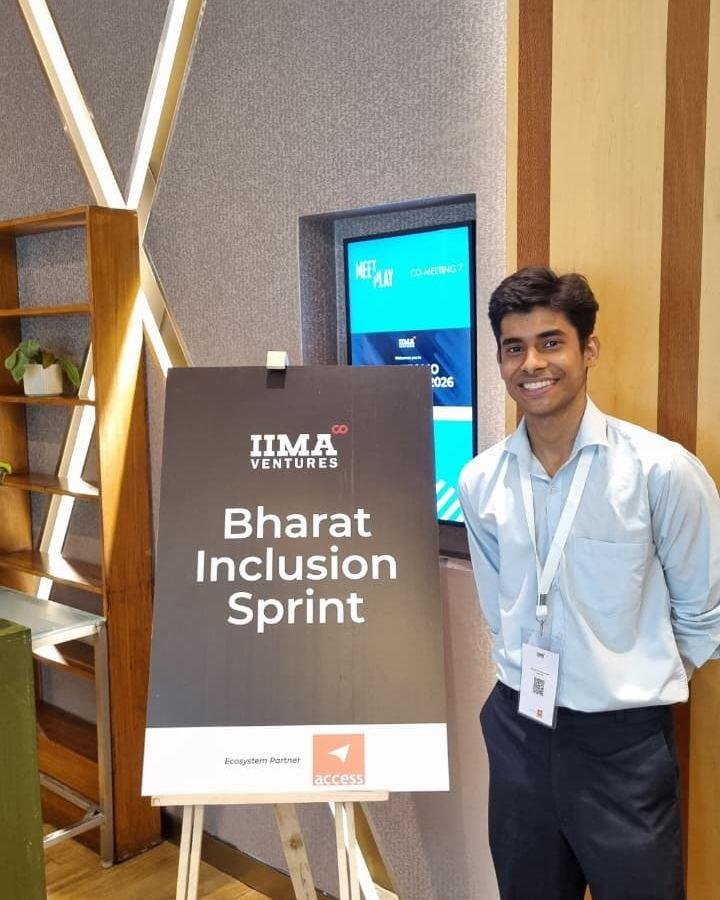
By now the idea had been through three rooms: a national AI summit in February, our own kiosk at the AIC NSUT launch, and a hall full of CAs in June. Here it picked up a second half. Clean books matter for tax, and they are also the first thing a lender asks for. At IIMA Ventures' Bharat Inclusion Sprint, the RBI showed us where that data is headed.
A day off from petrol-pump receipts
Most of our week goes on crumpled petrol-pump receipts, photographed at an angle, sometimes with a thumb over the GST number. So a day at the Pullman in New Delhi, where IIMA Ventures hosted the Bharat Inclusion Sprint, made a pleasant change. For one whole day, nobody handed us a bill.
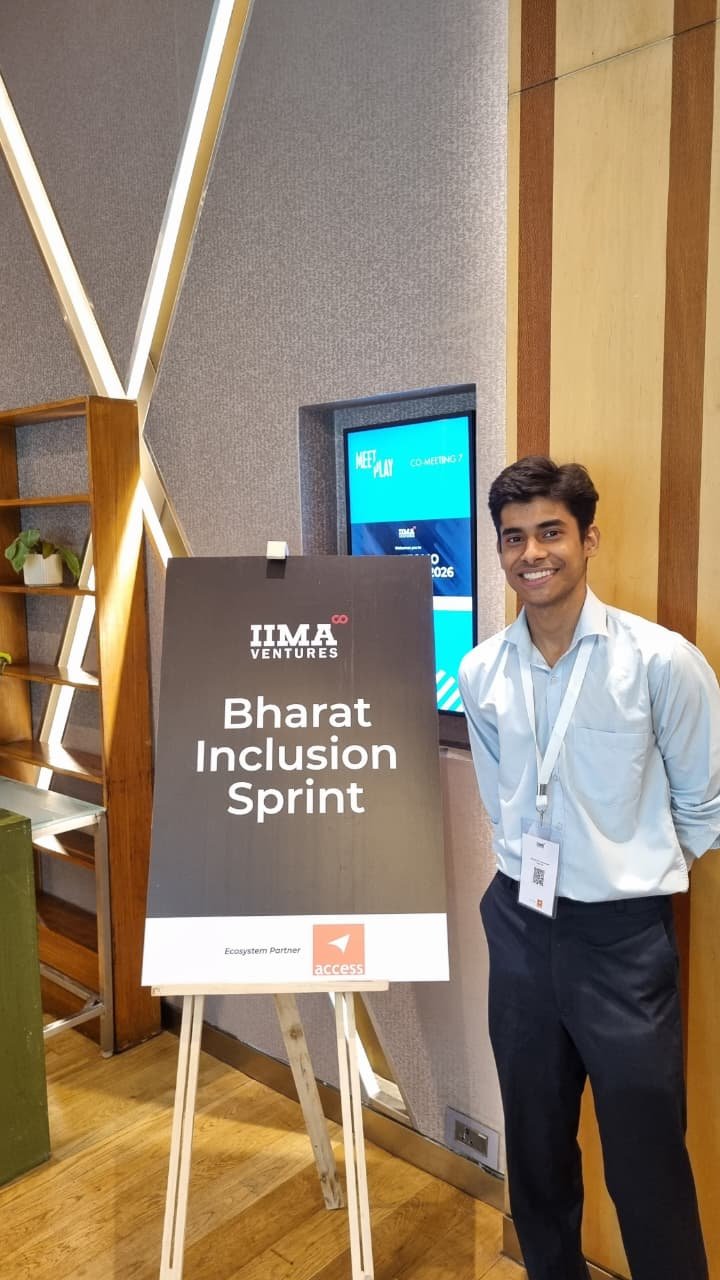
The morning opened with an introduction to IIMA Ventures, the startup incubator at IIM Ahmedabad. It is hard to slouch while an institution with that name explains what it looks for in a founder, and by the end of the session we were sitting a little straighter.
The RBI gave us homework
Aditi Dubey from the Reserve Bank of India gave the keynote, titled "Mandates of RBI for Fintechs & ULI". She joined over video, so for the whole keynote the central bank was a small rectangle in the corner of a very large screen. It held the room anyway.
Her first theme was a balance every fintech knows well. The RBI wants fintechs to grow, and it wants them compliant while they do it. Zoffer works inside a business's books, which is exactly where compliance lives, so we listened closely.
Then came ULI, the Unified Lending Interface. With ULI, a bank or lender can pull a borrower's financial history, land records and other details from one place instead of chasing paperwork across offices. Anyone who has helped a small business apply for a loan knows that chase. One office wants a stamped copy, the next wants the original, and the third has gone for lunch.
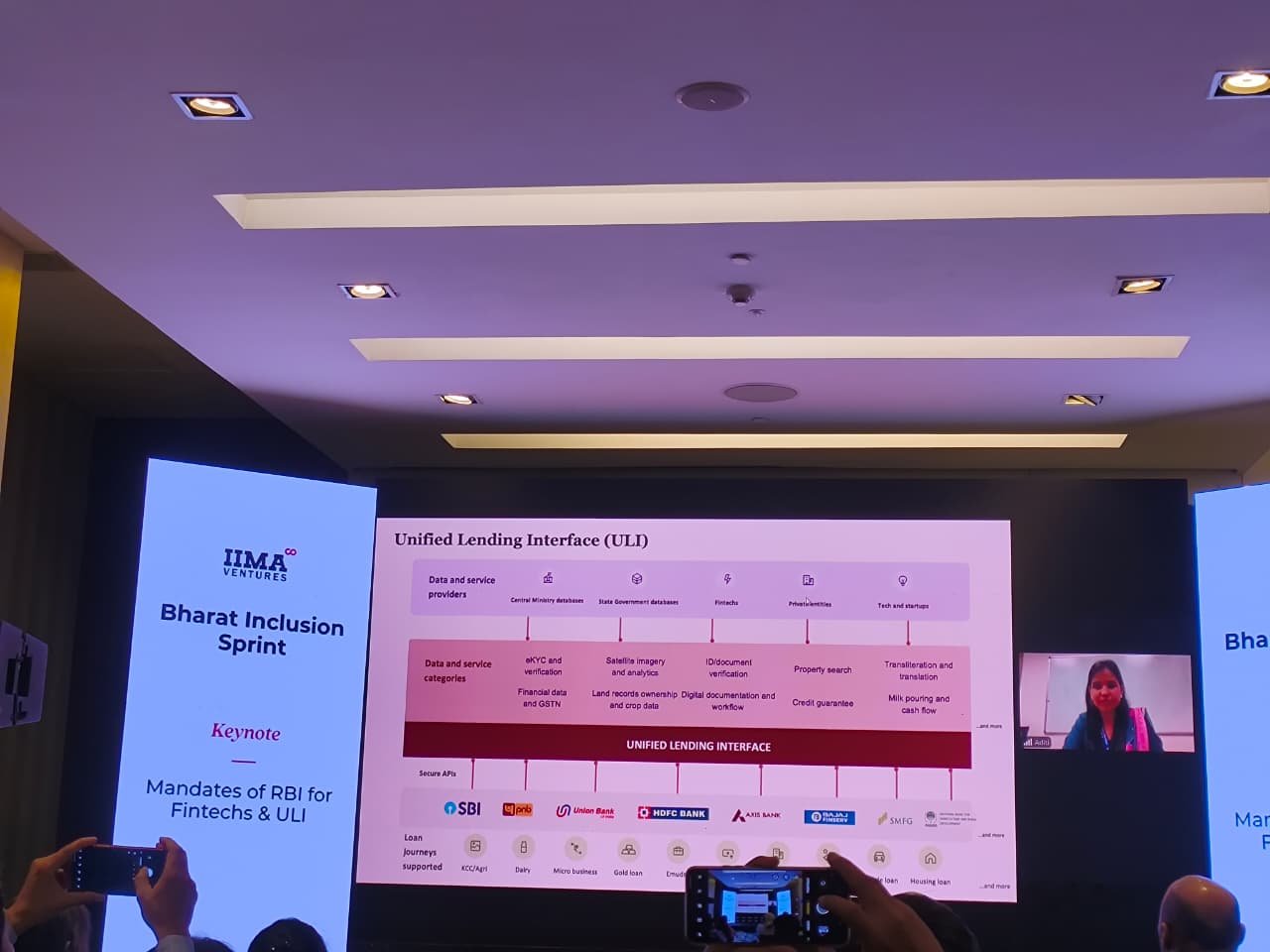
The slide shows how the plumbing fits together. At the top sit the data providers: central ministry and state government databases, fintechs, private entities and startups. They supply data such as eKYC, financial data and GSTN, land records and crop data, satellite imagery, property search and, our favourite, "milk pouring and cash flow". At the bottom sit lenders like SBI, PNB, Union Bank, HDFC Bank and Axis Bank, running loan journeys for KCC, dairy, gold and housing loans, among others.
Two boxes on that slide made us sit up. One was "Financial data and GSTN" on the data side. The other was "Micro business" on the loan side, which is more or less a description of our customers. The pipe between them is being built. What a lot of micro businesses still lack is clean data to send down it, because their records are a pile of paper bills and a long WhatsApp chat. Turning that pile into proper books is what Zoffer does today, and it is why credit sits on our roadmap: a lender cannot assess a business that has no books.
The pitch, in one breath
We gave the pitch we give anyone who asks what Zoffer does. A business owner forwards a bill on WhatsApp, our AI drafts the accounting entry, a person approves it on the dashboard, and it lands in Zoho Books. We have said it so often that it now sounds a bit like a jingle, but it still fits in one breath, and we count that as a feature.
ABC Ltd was not invited
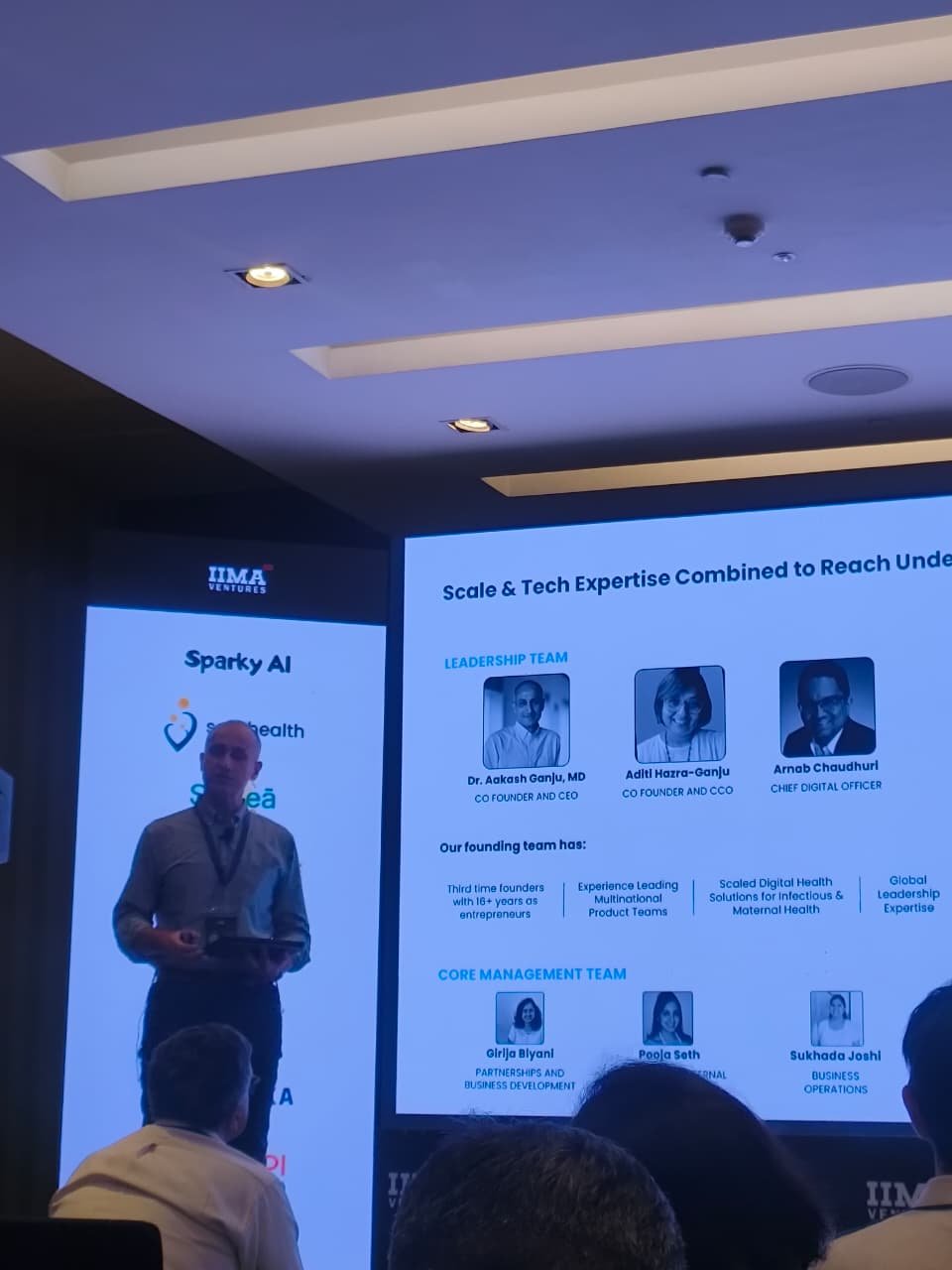
The day closed with a workshop where startups built pilots for real CSOs sitting in the room. These were actual organisations with actual problems, not the hypothetical case study about ABC Ltd that every textbook seems to share.
For us it was probably the most useful hour of the day. ABC Ltd agrees with whatever you propose. A real organisation tells you quickly, and politely, which of your assumptions won't survive a week in their office.
What we brought home
We brought home a lanyard and a notebook with "ULI" written in it more times than we would like to admit. We also came away sure of something we already suspected: for a small business, getting a loan starts with having books a lender can read, and a lot of businesses are still one WhatsApp forward away from having them.
The four events fit together better than we expected. The India AI Impact Summit put MSMEs on the national AI agenda, and at the AIC NSUT launch real users watched a forwarded bill turn into an entry. The ICAI AI Innovation Summit showed us that keeping a person in the loop is what the profession cares about most. And here, the RBI showed us the rails that clean books will run on.
Thanks to IIMA Ventures for hosting us, and to Aditi Dubey for the homework.
Frequently asked questions
Yes. Zoffer pitched at the Bharat Inclusion Sprint, hosted by IIMA Ventures, the startup incubator at IIM Ahmedabad, at the Pullman in New Delhi.
ULI is a Reserve Bank of India initiative that lets banks and lenders pull a borrower's financial history, land records and other details from one place, instead of chasing paperwork across different offices.
ULI makes it easier for lenders to pull a borrower's records from one place, but that only helps if the records exist. Zoffer turns the bills a small business forwards on WhatsApp into proper books in Zoho Books, which is the kind of record a lender looks for.